Palace Gates for Beginners: How to Start Watching Korean Historical Dramas Without a Spreadsheet
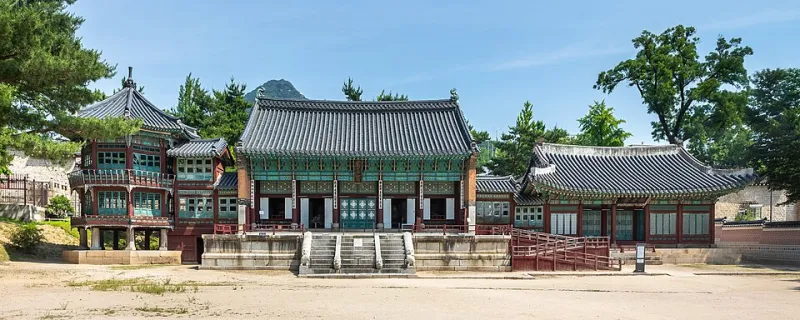
Photo: Basile Morin, CC BY-SA 4.0, via Wikimedia Commons
Every few months, someone in a K-drama forum posts a version of the same confession: I've watched thirty modern dramas, I love this stuff, and I am terrified of the historical ones.
The reasons are always similar. The costumes look expensive and confusing. The titles are things like The Red Sleeve and Under the Queen's Umbrella, which tell you nothing. And within ten minutes of episode one, four men in hats are arguing about a decree, and you've quietly opened a second browser tab.
Here's the good news: the hanbok isn't the hard part. The hats aren't either. The hard part is that sageuk assumes you already know how a Joseon court works, the same way an American legal drama assumes you know what a mistrial is. Once you pick up maybe a dozen recurring words and one or two structural rules, the whole genre opens up.
What 'Sageuk' Actually Means
The word covers any Korean drama set in the past. That's it. It ranges from the 1392–1910 Joseon dynasty to the Japanese colonial period of the early twentieth century, and it spans everything from talky palace procedurals to zombie horror to full-blown fantasy.
Two terms are worth knowing because they explain why some shows feel like a different genre entirely:
Fusion sageuk blends history with fantasy, comedy, or alternate timelines. A queen who wakes up with a twenty-first-century chef's soul inside her body is fusion. So is a world with magicians and soul-shifting.
Traditional sageuk plays it straighter — real events, real factions, real grief. Heavier, slower, often better, rarely where you should start.
Pick Your Gateway by Mood
Forget chronology. Forget which king came before which. Choose by the kind of evening you want to have.
If you want romance with consequences
The Red Sleeve is the standard recommendation for a reason: a court lady who wants to keep her own life and a crown prince who wants her anyway. It's gorgeous, it's devastating, and it commits to the cost of the era. If you'd rather something lighter, Love in the Moonlight is the gateway-drug version — a princess-disguised-as-a-eunuch premise played for charm.
If you want palace intrigue and sharp women
Under the Queen's Umbrella is the one to beat. A queen mother fighting to keep her unruly sons alive in a court where ambition is a blood sport. Almost no romance, all strategy, and Kim Hye-soo giving a performance that would headline any American prestige drama.
Rookie Historian Goo Hae-ryung is the friendlier on-ramp: a woman who wants to write the official record in a court that doesn't want her there, played as brisk workplace comedy in a hanbok.
If you want fantasy and don't want to feel the history homework
Alchemy of Souls is the obvious answer — soul-swapping, swordplay, a magic system that behaves like a video game, and a romance that carries the whole thing. Kingdom is the other one: Joseon politics plus a zombie outbreak, paced like a thriller and short enough to finish in a weekend.
If you want to laugh
Mr. Queen remains the most reliable entry point for people who think they hate historical dramas. A modern chef wakes up in the body of a queen in the 1800s. The palace politics are real, the jokes are not subtle, and the show uses its premise to explain the court to you, which is a gift.
The Short Glossary
You don't need a history degree. You need about ten words.
- Wang / Wangbi — king and queen.
- Daebi-mama — the queen mother or dowager queen. If she's in a scene, something is about to happen.
- Jeonha — 'Your Majesty,' how you address the king.
- Mama — a respectful address for a royal woman of high rank.
- Sangggung — a senior court lady, often running an entire palace wing.
- Naeuri — a respectful term younger characters use for a noble adult.
- Yangban — the aristocratic class. When a character sneers about 'blood,' this is what they mean.
- Seonbi — a scholarly gentleman. Usually poor, usually proud.
- Amhaeng eosa — a secret royal inspector traveling in disguise. If one shows up, the plot is about to accelerate.
- Faction names — you will hear two or three political blocs named repeatedly. Treat them as Team A and Team B. That's genuinely enough.
How to Watch Without Pausing Every Thirty Seconds
Give it two episodes before you Google anyone. Sageuk throws a dozen names at you in the first hour and only expects you to track four of them. The rest are set dressing. Your brain will sort them out if you let it.
Watch the costuming as a hierarchy chart. Hair pinned up versus down, the color of a robe, the height of a hat — the show is telling you exactly who outranks whom, visually, all the time. This is faster than any wiki.
Turn subtitles on and leave them there. Even if you switch to dubs elsewhere, historical Korean uses honorifics and address forms that dubs sand off. The subtitle track will tell you when someone drops formality, which is frequently the most important beat in the scene.
Don't start with the 60-episode epics. Long-form historical dramas are wonderful and also a commitment roughly equivalent to a part-time job. Save those for year three.
Accept the flashback. Sageuk loves an origin flashback in episode one and again in episode nine. It's not a continuity error. It's a structural habit.
One Last Thing
The reason these shows feel intimidating is also the reason they land so hard. The stakes are literal — a wrong word to the wrong minister can end a family line. American TV spends seasons trying to manufacture that kind of weight. Sageuk starts with it and then hands you a love story on top.
Start with Mr. Queen if you want to laugh, Under the Queen's Umbrella if you want a knife fight in silk, or The Red Sleeve if you're ready to be genuinely upset. Any of the three will get you through the gate.