A Bowl of Rice Says More Than a Monologue: How Asian Dramas Use Food to Break Your Heart (In the Best Way)
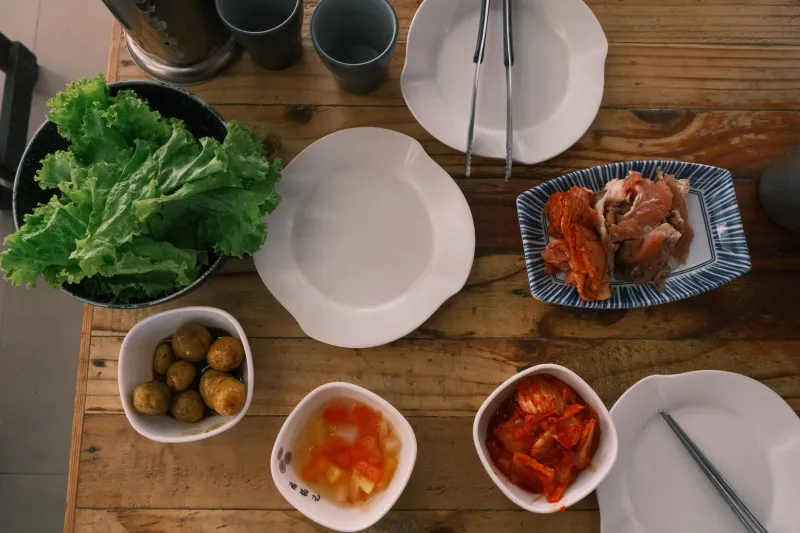
There's a scene in Reply 1988 where a mother quietly slides a plate of food under her daughter's bedroom door after an argument. No words. No dramatic music swell. Just a plate, and a closed door, and everything unsaid on both sides of it. If you've seen it, you probably teared up. If you haven't, trust that you will.
Food in Asian dramas isn't background detail. It's language. And Korean, Japanese, Thai, and Chinese television writers have spent decades perfecting a dialect that American producers are only just starting to understand.
The Table as Emotional Terrain
In a lot of American television, meals are logistical. Characters eat to have a reason to be in the same room. The food itself is largely incidental — a prop that keeps actors' hands busy while they deliver exposition. Think of how many TV dinners and coffee shop conversations you've watched where the actual food disappears after the first two minutes.
Asian dramas treat the table completely differently. The meal is the scene. Who cooked it, what they made, how it's served, whether it gets eaten or left untouched — all of it carries meaning that the dialogue doesn't need to spell out.
In Korean culture specifically, cooking for someone is one of the most direct expressions of care available. It's not just a nice gesture. It's a declaration. When a character in a K-drama makes ramyeon at midnight for someone they love, that's not just a snack. That's a confession. Korean viewers read it that way instinctively, and once you know to look for it, you'll never watch a kitchen scene the same way again.
What the Lunchbox Is Really Saying
Few props in Asian drama carry more emotional weight than the dosirak — the packed lunchbox. It shows up constantly across genres, and it almost always means the same thing: I thought about you this morning. I wanted you to be okay today.
In My Mister, the act of preparing and sharing food becomes one of the central ways the show communicates connection between two characters who barely speak openly about their feelings. The meals do the emotional work that the characters can't yet do themselves.
Japanese dramas take this even further. Series like Midnight Diner and Samurai Gourmet are essentially built around the premise that food is the primary vehicle for human connection and memory. Every dish carries a story. Every meal is a relationship. The food isn't a metaphor — it is the emotional content.
The Intimacy of the Kitchen
Kitchens in Asian dramas are sacred spaces. They're where characters are most vulnerable, most themselves. The act of cooking — the repetitive, physical, unglamorous work of it — strips away the armor that characters wear in public scenes.
This is why so many pivotal emotional moments in K-dramas happen not in grand settings but in cramped apartment kitchens at odd hours. Crash Landing on You uses shared cooking scenes to show two people from completely different worlds finding common ground in the most human activity possible. It's Okay to Not Be Okay uses food refusal as a character beat — the moment a deeply wounded character finally accepts a meal is more emotionally significant than almost any line of dialogue in the series.
American showrunners tend to default to confrontation scenes, hospital scenes, or rain-soaked outdoor declarations for emotional climaxes. Asian dramas keep returning to the kitchen because they understand that vulnerability is most believable in ordinary settings.
Food as Family History
One of the most sophisticated ways Asian dramas use food is as a vehicle for intergenerational storytelling. Recipes passed down from grandmothers. Dishes that taste like childhood. Meals that a character can't eat anymore because the person who made them is gone.
Little Forest, the Korean film that has influenced a generation of drama writers, is essentially a meditation on how food connects us to place, family, and identity. That influence shows up constantly in Korean dramas that use a character's relationship with food to show their relationship with their past.
In Hometown Cha-Cha-Cha, the communal meals in a small seaside village aren't just charming set dressing. They're the show's thesis statement — that belonging is built slowly, at shared tables, over time. The food scenes carry the entire emotional argument of the series.
What American TV Is Starting to Figure Out
There's a reason shows like The Bear became cultural touchstones — American audiences are clearly hungry (sorry) for storytelling that takes food seriously as emotional content. The difference is that The Bear treats the kitchen as a pressure cooker of conflict. Asian dramas more often treat it as a site of healing.
Both approaches are valid. But the healing version — the quiet, careful act of making something for someone, and the quiet, careful act of accepting it — might be the harder story to tell. It requires patience from the writer and trust from the audience. It asks you to believe that a bowl of soup can matter as much as a dramatic speech.
If you've been watching Asian dramas for any length of time, you already believe it. And you probably can't watch someone eat ramyeon on screen anymore without feeling something you couldn't quite explain if someone asked.