Your Watch Party Is a Grocery Run Now: The Snack Economy K-Dramas Built
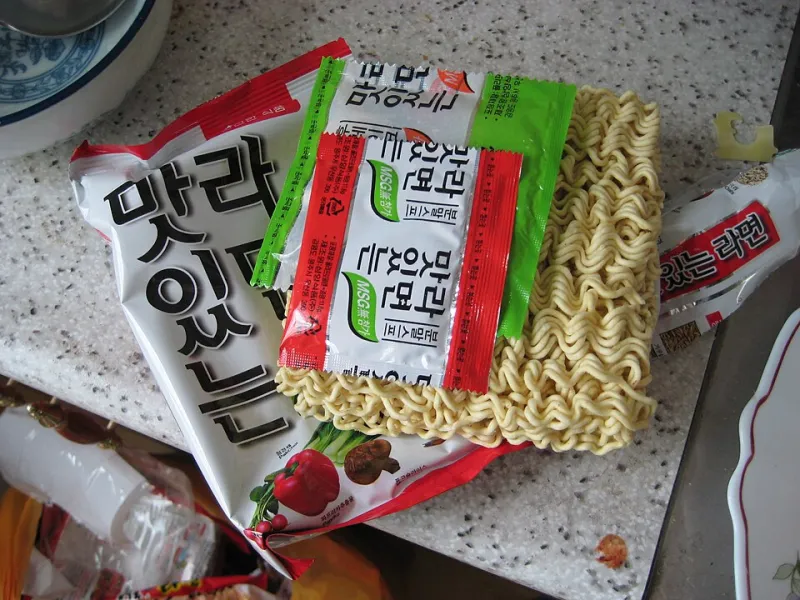
Photo: Timber Tank, CC BY-SA 2.0, via Wikimedia Commons
Once upon a time, watching TV in America meant one thing: a bowl of buttered popcorn, maybe some chips if you were feeling fancy. Then Asian dramas arrived, and suddenly the popcorn felt... insufficient. Because on screen, the characters were eating better. And audiences noticed.
The Ramen That Broke Supply Chains
If you've been to a grocery store in the last couple of years, you've witnessed it: the buldak phenomenon. The fiery Korean instant noodles became a full-blown American pantry staple, driven in part by a generation of viewers who watched characters slurp steaming bowls of jjajangmyeon and tteokbokki at midnight and thought, "I need that in my life."
Grocery stores that used to stock one sad shelf of instant ramen now dedicate entire endcaps to Korean and Japanese noodles. The spicy ones sell out first. There are TikTok challenges built entirely around surviving the heat level. Somewhere, a drama food stylist is unknowingly responsible for millions of dollars in noodle sales.
From Niche Aisle to Mainstream Run
The deeper story here is about Asian grocery stores in America. For decades, H Mart and its siblings were destinations — places you drove to specifically, maybe once a month. Drama fandom changed the traffic pattern. Suddenly, non-Korean viewers were making weekly runs for gochujang, fish cakes, and the specific brand of shrimp crackers their favorite character eats.
The result? Mainstream chains expanded their Asian snack sections dramatically. Your local Kroger now carries honey butter chips. Your convenience store has choco pies next to the Snickers. What was once a specialized shopping trip is now a casual add-on to the weekly grocery run — one of the quietest, most delicious cultural shifts of the streaming era.
The Mini-Fridge Era
Talk to enough drama fans and a pattern emerges: the dedicated viewing setup. It starts innocently — a small cooler for drinks during a binge weekend. Then someone upgrades to a mini-fridge stocked with Korean banana milk, canned coffee, and soju for the sad-episode nights. The couch becomes a command center. The snack drawer becomes infrastructure.
And it's not just shelf-stable stuff. American fans embraced the delivery-food culture they saw on screen — the idea that watching a show with the right food is part of the experience, not an afterthought. Fried chicken and beer while watching a rom-com? That's not dinner and a show. That's the show.
The Official DongahTV Snack Pairing Guide
Want to snack like a pro? Match your food to your genre:
- Squid Game-style survival thrillers: Something you can grip nervously. Spicy chips, tteokbokki snacks. You will not taste them during the tense parts, and that's fine.
- Comfort slice-of-life dramas: Instant ramen, obviously. The fancier kind with the dried vegetable packet. Eat it from a proper bowl with an egg on top. Live a little.
- Heartbreaking melodrama: Ice cream, ideally something you can eat slowly. Bingsu if you're ambitious — shaved ice, sweetened condensed milk, fruit. Crying is encouraged; soggy tissues are a given.
- Feel-good rom-coms: Fried chicken (store-bought is fine, we don't judge) and something cold to drink. This is canon. The dramas taught us this pairing and we are simply obeying.
- Weekend-long binges: Snack variety packs, fruit jellies, and a hydration plan. You're going to be here a while and future-you deserves options.
More Than a Trend
Strip away the novelty and what's left is something genuine: food as part of the viewing ritual. Asian dramas never treated meals as background noise — they filmed them lovingly, shot close-ups of every bite, and made eating feel like connection. American audiences absorbed that lesson along with the subtitles.
So the next time you press play, skip the stale popcorn. Boil some noodles, crack open a cold one, and eat like the third lead who's clearly better than the second lead. Your watch party deserves it.