From 'Annyeong' to Actual Conversations: The Hilarious Pipeline From Binge-Watching to Language Apps

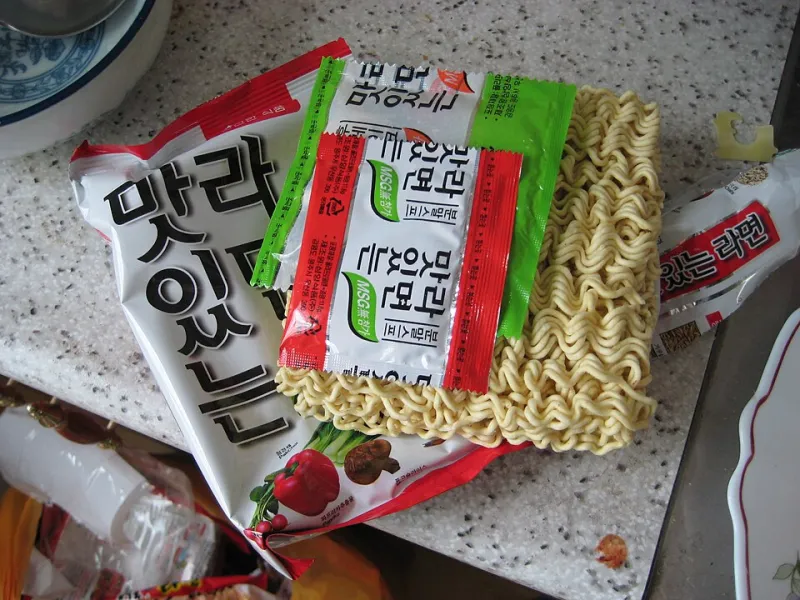
Photo: Nenad Stojkovic, CC BY 2.0, via Wikimedia Commons
There's a moment every K-drama fan knows by heart. You're twelve episodes deep into a series, and without thinking, you blurt out "Aigo!" when the male lead trips over his own feelings. Then it hits you: you've been absorbing a language through osmosis, and now your brain wants more.
Welcome to the fluency trap — that seductive gap between what you understand while watching and what you could actually say out loud.
The Vocabulary You Didn't Mean to Learn
Without a single flashcard, most drama fans develop a surprisingly functional passive vocabulary. You know "oppa" and "unnie." You understand that "hwaiting!" is encouragement, not a weather report. You've internalized "mianhae," "gwenchana," "saranghae," and the ever-versatile "jinjja?" — the Korean equivalent of "seriously?!" that works in roughly 400 situations.
Linguists call this passive recognition, and it's real. After hundreds of hours of listening, your ear catches familiar words in a sea of sound. The problem? Recognition isn't production. You can hear "jeongmal?" perfectly well, but forming your own sentence is a different beast entirely.
The Duolingo Download Phase
Ask around any K-drama fandom and you'll find the same origin story: the show ends, the void hits, and somewhere between a rewatch and a YouTube interview with subtitles, they download Duolingo. Or sign up for a community college class. Or buy a workbook that's currently collecting dust on a nightstand.
We talked to fans at every stage of the pipeline:
The Tourist Tier: Can order food in Korean, says "annyeonghaseyo" to Korean coworkers, and recognizes maybe 300 words. Perfectly happy. Watched one too many eating-broadcast scenes and now confidently asks for kimchi jjigae.
The Casual Conversationalist: Took classes for a year, can survive a basic exchange, still needs subtitles but catches when they're wrong — which is simultaneously thrilling and infuriating.
The Deep Diver: Passed TOPIK Level 3, watches without subtitles and misses maybe 20% of the wordplay, and has strong opinions about translation choices. This person is 2% of the fandom and 90% of the Discord servers.
How Deep Can You Actually Go?
Here's the honest math. Korean is classified as a Category IV language for English speakers — roughly 2,200 hours of study to reach professional working proficiency. Your 16-episode binge? That's maybe 12 hours of listening input. Wonderful for your ear, useless for your grammar.
But here's the thing nobody says out loud: you don't need fluency to get real value.
- Tier 1 (0 effort): Passive listening skills. You'll catch names, emotional beats, and recurring phrases. You already have this.
- Tier 2 (15 min/day): Apps and a beginner podcast. In six months, you'll understand maybe 30% of a slice-of-life drama's dialogue. That's genuinely fun.
- Tier 3 (dedicated hobby): A structured course plus weekly conversation practice. Two years in, you can have real conversations and watch reality shows comfortably.
- Tier 4 (lifestyle): You're reading webtoons in the original, correcting Netflix subtitles, and planning a Seoul trip around language exchanges.
Why the Dramas Make Better Teachers Than You'd Think
K-dramas are weirdly great listening practice because the emotional stakes are so high. You feel what's happening even when you don't understand the words, which gives your brain constant context clues. Plus, dramas repeat key phrases — apologies, confessions, the "let's eat something" lines — until they stick forever.
Pro tip from the fans we spoke to: rewatch a scene you know well with Korean subtitles on. Matching the sounds you already know to their written form is the single fastest hack for making passive vocabulary active.
The Realistic Verdict
Most of us will live comfortably in Tier 1 and Tier 2, and that's nothing to apologize for. Knowing how to say "it's delicious" while actually meaning it, understanding why a character's word choice in episode 9 was devastating, greeting a Korean restaurant owner in their language — that's not failure. That's a door cracked open.
The trap isn't learning Korean. The trap is thinking you need to be fluent for the effort to count. Turn on episode one. Your brain is already taking notes.