Slow Burns and Big Feelings: How K-Dramas Are Quietly Raising the Bar for Romance in America
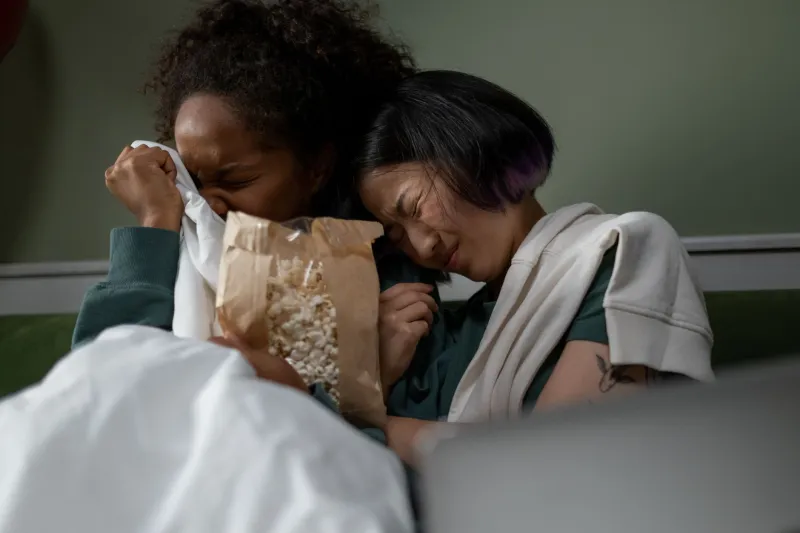
There's a particular kind of frustration that hits when you finish a K-drama and then try to watch a Hollywood rom-com. The American version feels rushed — two people meet cute, have a misunderstanding, kiss in the rain, credits roll. Meanwhile, you just spent sixteen episodes watching two people who couldn't even hold eye contact finally reach for each other's hands, and you felt every single second of it.
That contrast isn't lost on American audiences. Across streaming platforms, K-dramas and other Asian series are consistently pulling in viewers who weren't raised on this kind of storytelling — and those viewers are walking away with a completely different idea of what romance is supposed to look like. Not just on screen, but in their actual lives.
The Slow Burn Isn't a Bug, It's the Whole Point
One of the first things new K-drama viewers notice is the pacing. A couple might not kiss until episode ten. A confession might get interrupted four times before it actually lands. And somehow, instead of being annoying, it's completely addictive.
That tension is intentional. Korean drama writers understand that anticipation is its own kind of intimacy. The slow build forces viewers to pay attention to small things — a lingering glance, a hand that almost touches another hand, a character who remembers something the other person said three episodes ago. These micro-moments accumulate into something that feels genuinely earned.
Compare that to the average American romantic comedy, where emotional shortcuts are everywhere. The montage replaces the development. The grand gesture replaces the actual conversation. Audiences are handed the emotional payoff without the emotional journey, and more and more people are noticing how hollow that feels.
"I started watching Crash Landing on You during the pandemic and I couldn't stop," says Dana, a 31-year-old teacher from Austin, Texas. "I kept thinking — why don't real relationships look like this? Why don't the guys I date actually listen the way these characters do? It kind of messed me up in the best way."
Emotional Availability as a Love Language
Here's something K-dramas do that American TV largely avoids: they let male characters be emotionally available without treating it as a punchline or a weakness.
The male leads in Korean dramas — your brooding CEOs, your grumpy doctors, your stoic detectives — almost always have an emotional interior life that gets explored. They don't just want the girl; they're processing something. They have wounds. They have growth arcs. And crucially, they communicate, even when it's uncomfortable.
Relationship therapist and avid drama viewer Carla Medina, based in Los Angeles, points to this as one of the most significant things her clients are taking away from Asian dramas. "I've had multiple clients — both men and women — bring up K-dramas in sessions. They'll say something like, 'I watched this show and realized I've never once told my partner what I actually need.' These shows model a kind of emotional directness that a lot of Americans weren't raised seeing in relationships."
That directness doesn't always look like a big speech. Sometimes it's quieter than that. A character who shows up without being asked. Someone who apologizes and means it. A love interest who remembers the details. These are small things, but they add up to a portrait of partnership that feels genuinely aspirational.
What Hollywood Keeps Getting Wrong
It's worth being specific here, because the gap between Hollywood romance and K-drama romance isn't just about pacing. It's about values.
American romantic comedies tend to center the obstacle — the misunderstanding, the rival love interest, the career conflict. The relationship exists to be tested, and the test is usually external. K-dramas do use obstacles too, but the more interesting tension tends to be internal. Characters wrestle with their own fears, their own pride, their own past. The real obstacle is usually the character's relationship with themselves.
That shift in focus changes everything. When the drama is internal, viewers get to watch actual character development. You see someone become a better version of themselves because of love, not just despite obstacles to it. That's a fundamentally more optimistic — and more emotionally sophisticated — take on romance.
There's also the question of physical intimacy. K-dramas are notably restrained by American standards, and for a lot of viewers, that restraint turns out to be surprisingly refreshing. "I didn't expect to like it," admits Marcus, a 27-year-old from Chicago who got into K-dramas through his college roommate. "But there's something about watching characters who are clearly crazy about each other and still taking their time. It makes every little moment feel like a big deal."
The Real-World Ripple Effect
This isn't just casual observation — there's a genuine behavioral shift happening. Online communities dedicated to K-dramas are full of threads where fans discuss how the shows have changed their dating standards. Not in an unrealistic "I want a chaebol" way, but in a more grounded sense: they want partners who communicate, who are emotionally present, who treat small moments with care.
Dating app profiles in the US have increasingly started referencing K-drama fandom as a personality marker — and not just as a niche interest. It signals something about emotional sensibility, about what someone values in connection.
Carla Medina sees this as genuinely positive. "Romance media shapes expectations. It always has. If the media people are consuming is modeling healthy communication, emotional vulnerability, and patience, that's going to influence what they look for and what they're willing to offer in relationships. That's not a bad thing at all."
A New Template for Love Stories
What Korean and Asian dramas have done — almost without anyone in Hollywood fully registering it yet — is offer a different template for what a love story can be. One where the journey matters more than the destination. Where emotional intelligence is attractive. Where love is something you build slowly and carefully, not something that just happens to you.
American audiences are hungry for that. The streaming numbers don't lie, and neither do the fan communities that have grown up around these shows. People aren't just watching K-dramas for escapism (though that's part of it). They're watching because somewhere in those sixteen episodes, they're seeing a version of romance that actually feels possible — and worth wanting.
That might be the most quietly radical thing about the global K-drama boom. It's not just changing what we watch. It's changing what we ask for.